
Explore other taps Sometimes referred Experts at use One of the most used items in a home or commercial building. From kitchens and baths to work stations and restaurants, the faucets not only add a stylish feel but also contribute to a safer water experience. However, there is one critical question that most property owners tend to forget: how often do you need to change your taps? Knowing when it’s time for a new fixture can save you money and prevent water damage, not to mention ensure optimal functionality—especially in locales like Faucets in Pakistan, where water quality, habits of use and climate can all impact your fixture’s longevity.
Here at Tile n Taps, we frequently consult with customers about general faucet care and whether it is time to replace their equipment over the long term. This guide consolidates all that information into something clear, useful for the user.
The Importance of Faucet Replacement More Than You Think
Faucets, despite their seemingly straightforward nature are rather intricate mechanisms with various internal constraints like valves, cartridges, washers and seals. This parts wear out over time with frequent use, minerals in the water and pressure fluctuations.
Old one, but old faucets aren’t doing you any favors:
- Save water leaked and dripping down the drain
- Keep water pressure and flow consistent
- Improve hygiene and cleanliness
- Improve any kitchen or bathroom overall appearance
- Avoid costly plumbing repairs
For households and Businesses with FAUCETS IN PakistanIn, replacement time is especially crucial because hard water and particles can wear out the working parts inside the faucet.
Average Lifespan of Faucets
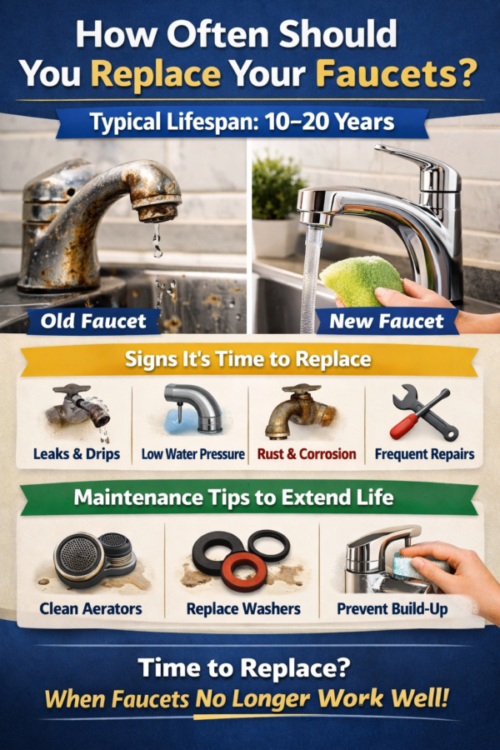
As a rule of thumb, quality faucets should last 10 years to 15 years. But that’s an approximation. The real lifespan of any pair of Uggs varies due to:
- Frequency of use
- Quality of materials (brass, stainless steel, zinc)
- Water quality and mineral content
- Maintenance habits
- Installation quality
In households or where commercial kitchens are particularly active, faucets may need to be replaced even more frequently—about every 7–10 years in some cases.
Signs You Need a New Faucet
1.Persistent Leaks and Drips
If a faucet still leaks after being repaired, it is likely due for replacement. If it continues to drip, not only does it waste water, but you may notice higher utility expenses and stained material in the area.
2. Corrosion, Rust, or Peeling Finish
If you see corrosion, rust or chrome that’s flaking away the material is breaking down. Appearance and hygiene – these are some of the things that will happen over time, so better replace.
3. Low or Uneven Water Pressure
If your plumbing is fine and the water’s not flowing properly, internal parts may be clogged or damaged beyond repair.
4. Frequent Repairs
When repairs are frequent, replacing your heater is typically more budget friendly in the long run.
5. Outdated Design or Functionality
New faucets also have superior ergonomics, work more smoothly and use water more efficiently. The installation of new fixtures will attractively improve everyday use.
Effect Of Water Quality On Tap In Pakistan
Water types are different all over the place but you can rub into hard or mineralised water in many of them. This has direct effects on Faucets in Pakistan by:
- Drip moisture collection and scale formation into the cartridges and aerators
- Rapid wear and tear on rubber washers and gaskets
- Gradually, smooth handle movement was decreased over time.
Regular cleaning can mitigate this, but even then, faucet materials may not last as long under such conditions. Selecting materials that will last and scheduling to replace them once they get old are key.
Repair vs. Replace Deciding What to Do
Here’s a litmus test to help you calculate where you stand:
Consider Repair When:
- The faucet is relatively new
- It is an easy fix (replacement of washer or cartridge).
- The body and finish of the faucet is perfect
Consider Replacement When:
- The faucet is 10+ years.
- Multiple parts are failing
- There is visible corrosion or breakages
- Spare parts are hard to find
It’s a decision we made at Tile n Taps when living in the fast lane always comparing short term cost to long-term performance and reliability.
Benefits of Replacing Old Faucets
When you install new faucets, it’s not just about fixing problems with the old ones — it’s about increasing value.
Key benefits include:
- Better water control and smoother operation
- Improved hygiene with easier-to-clean surfaces
- For a more polished look to the most visible rooms in your house
- Lower risk of leaks and water damage
- Increased overall property appeal
It’s a matter of increasing daily comfort for homeowners. It is all about professionalism and reliability for companies.
How Frequently Should You Change Faucets on a Regular Basis in Kitchens vs Bathrooms
Kitchen Faucets
Kitchen faucets get used more and they’re exposed to grease, food particles, and hotter water. It depends but on average you need to replace it every 8–12 years.
Bathroom Faucets
Bathroom sink faucets usually get lighter use and can be good for 10-15 years with proper care.
Understanding when and how they are used helps plan replacements more effectively, including where to source the right kind of Faucets in Pakistan1 for local needs.
Choosing the Right Replacement Faucet
Replace them with:
- Material that would last for long time under local water condition enough.
- Easy-to-operate handles and cartridges
- Styles complimentary to your interior design
- Good after-sales service and Spare parts are available
Businesses such as Tile n Taps specialize in providing answers that are a blend of quality, design and everyday utility.
FAQs: Frequently Asked Questions About Replacing a Faucet
1.How can I determine whether my faucet is repairable instead of needing to be replaced?
Repair – for a faucet that is repairable, and the faucet itself is less than 8 years old with no coral or body damage. If you have an older faucet and are continually having problems, you’d be better off replacing it.
2. Do old faucets cause higher water bills?
Yes. And slow leaks can still waste plenty of water over time, raising your monthly fee too.
3. Is hard water the reason faucets don’t last?
Absolutely. Scale can cause internal elements to wear out faster, particularly if you have hard water.
4. Is it worth replacing old faucets with new ones?
New faucets feature greater functionality, superior finishes and smoother operation, all of which make a good-looking faucet a welcome addition to any bath or kitchen.
5. How often do you replace commercial property faucets?
Commercially, you’ll have to replace it every 5–8 years on average due to heavy use and depending on the quality of care.
Conclusion
Understanding how frequently to change out your faucets plays a role in keeping a well- functioning, efficient and sanitary home. Most faucets have a life span of 10–15 years, but some could last longer or less time, depending on things like quality of the water and how much they’re used and maintained. For use with Faucets in Pakistan homes and businesses, the replacement part is an ideal solution–it’s easy to install and even easier to operate.
At Tile n Taps, the goal is always to make informed choices—help customers select products that are functional and long lasting – suited to everyday life. Replacing faucets when the time is right isn’t maintenance, it’s investing in long-term peace-of-mind.